Your wedding day moves quickly. A thoughtful timeline helps you enjoy every part of it without rushing from one moment to the next.
It also gives your photographer the time and light needed to create beautiful, emotional images.
A strong wedding photography timeline does more than list times. It protects the moments you will want to remember. It creates room for unexpected laughter, meaningful hugs, happy tears, and the quiet moments that happen between major events.
Here is how to build a photography-friendly wedding day timeline, especially for weddings in Arizona.
Why Your Wedding Timeline Matters for Photography
Your timeline determines more than when the ceremony begins. It affects:
- How much getting-ready coverage you receive
- Whether your portraits happen in harsh sun or flattering light
- How relaxed your family photos feel
- Whether you have time for a first look
- How much of your reception your photographer can document
- Whether you receive sunset portraits or nighttime images
Photography depends on time, light, location, and emotion. When all four work together, your images feel natural and complete.
When they do not, the day can feel rushed. Portraits may be shortened. Family members may be difficult to find. Sunset may disappear before you reach the best location.
The solution is simple: build your timeline around the photographs that matter most to you.
Start With Your Ceremony and Sunset Time
Before choosing a ceremony time, look up the sunset for your exact wedding date and location.
Arizona has dramatic desert light. It also has intense midday sun, fast-changing shadows, and different sunset times throughout the year. A ceremony at 5:00 p.m. may have beautiful light in one season and harsh light in another.
Your venue’s surroundings matter, too. Mountains, buildings, trees, and canyon walls can block direct sunlight before the official sunset time.
As a general guideline, plan your main couple portraits during the final 60 to 90 minutes before sunset. This is when Arizona’s light becomes softer, warmer, and more dimensional.
If you want sunset portraits, tell your photographer and coordinator early. Do not leave this decision until the wedding day.
For more inspiration, explore Signature Wedding Photography’s bride and groom photography gallery. It shows how different locations and lighting conditions shape the final images.
Decide Whether You Want a First Look
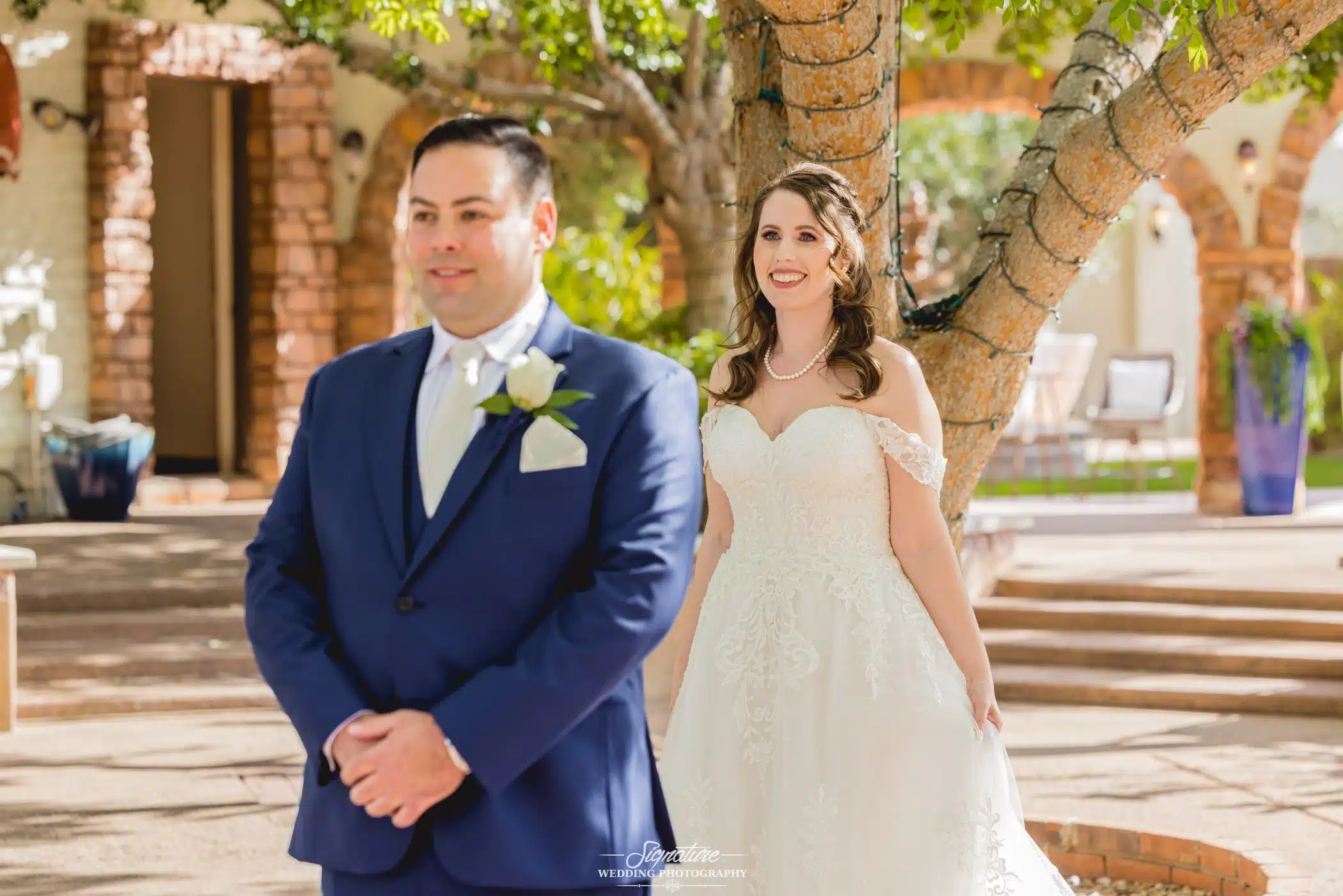
A first look gives you a private moment together before the ceremony. It also gives your photographer more flexibility.
Benefits of a first look
A first look can help you:
- Spend more of the cocktail hour with your guests
- Complete wedding party photos before the ceremony
- Complete most family portraits earlier
- Reduce the number of photographs needed after the ceremony
- Protect time for relaxed sunset portraits
- Enjoy more of your reception
Schedule the first look approximately two to three hours before the ceremony. Choose an area with open shade or soft window light. Arizona’s afternoon sun can be strong, so direct overhead light is rarely the best choice for this emotional moment.
After the first look, plan 30 to 45 minutes for wedding party portraits and 30 to 45 minutes for family photos. Your photographer can help you create an efficient shot list.
If you prefer a traditional reveal
You do not need to have a first look. Many couples prefer seeing each other for the first time at the ceremony.
That choice is meaningful. It simply requires more careful timing.
If you skip the first look, schedule the ceremony approximately 90 minutes before sunset when possible. This creates room for family photos, wedding party portraits, and couple portraits afterward.
Your post-ceremony portrait window may be shorter. Keep your family photo list organized. Ask a trusted person to help gather everyone immediately after the recessional.
You can also complete individual wedding party portraits before the ceremony. For example, the couple can photograph separately with their respective attendants while still maintaining the traditional reveal.
Learn more about the emotional importance of this part of the day through our wedding ceremony photography gallery.
Plan Enough Getting-Ready Time
Getting-ready coverage is not only about hair and makeup. It documents the atmosphere before the ceremony.
Your photographer may capture:
- Wedding invitations and stationery
- Rings, shoes, jewelry, and heirlooms
- The dress hanging in the room
- Hair and makeup details
- Friends helping with final touches
- Candid conversations
- The moment you put on your dress
- Parent or family reactions
- Individual portraits before leaving for the ceremony
Plan at least 60 to 90 minutes of photography coverage for getting ready. Add more time if you want detailed images or have a large wedding party.
Ask your hair and makeup team when you need to be finished. Then work backward from your photographer’s arrival time.
For example:
- 12:00 p.m.: Hair and makeup begins
- 2:00 p.m.: Photographer arrives
- 2:00–2:30 p.m.: Details and room photographs
- 2:30–3:15 p.m.: Candid preparation and final makeup
- 3:15–3:45 p.m.: Dress, jewelry, and individual portraits
- 3:45–4:00 p.m.: First look preparation
Keep the getting-ready room as clean as possible. Place bags, food containers, water bottles, and extra hangers in one area. A tidy room gives your photographer more options for beautiful, uncluttered images.
Build in Buffer Time
Every wedding needs buffer time. This is one of the most important parts of your timeline.
Hair and makeup can run late. A family member can take a wrong turn. A boutonniere can need fixing. A ceremony can begin 10 minutes behind schedule.
Buffer time keeps one delay from affecting the entire day.
Add at least 10 to 15 minutes between major events. Add more when travel, elevators, shuttles, or large family groups are involved.
You should also plan travel time between portrait locations. A five-minute drive may become 15 minutes when you include loading equipment, walking in formal clothing, and finding parking.
Do not fill every minute. Empty space is useful. It gives you time to breathe, enjoy your partner, and respond to the unexpected with empathy instead of stress.
Schedule the Ceremony for Better Light
Outdoor Arizona ceremonies require special attention to the sun.
Avoid placing the couple directly beneath harsh overhead light when possible. Ask your venue or coordinator about:
- The direction of the sun
- Available shade
- The position of the ceremony arch
- The background behind the altar
- Whether guests will be looking into the sun
- Whether nearby mountains will block the final light
Your photographer can work in natural light, shade, flash, or low light. However, the ceremony location still affects how comfortable you and your guests feel.
A ceremony lasting 20 to 30 minutes is common. Religious or cultural ceremonies may last significantly longer. Ask your officiant for a realistic estimate before finalizing your photo schedule.
Include time for the recessional, congratulations, and a private moment together before beginning formal portraits.
Give Family Photos a Clear Structure
Family portraits become much easier when you prepare a list in advance.
Group combinations often take 3 to 5 minutes each when everyone is present and ready. A list of 10 combinations may require 30 to 45 minutes.
Keep the list focused. Start with the largest groups. Then release people as their photos are complete.
For example:
- Couple with both immediate families
- Couple with one partner’s immediate family
- Couple with the other partner’s immediate family
- Couple with grandparents
- Couple with siblings
- Couple with wedding party
- Couple with parents individually
- Couple with special relatives or friends
Assign a family member to help locate people. Your photographer should direct the portraits. Your helper should gather the people.
This simple division of responsibility saves time and keeps the mood positive.
Protect Your Sunset Portrait Window
Sunset portraits deserve a dedicated place in your timeline. Do not treat them as an optional extra.
Plan 20 to 30 minutes at minimum. Thirty to 45 minutes gives your photographer more room to create a variety of images.
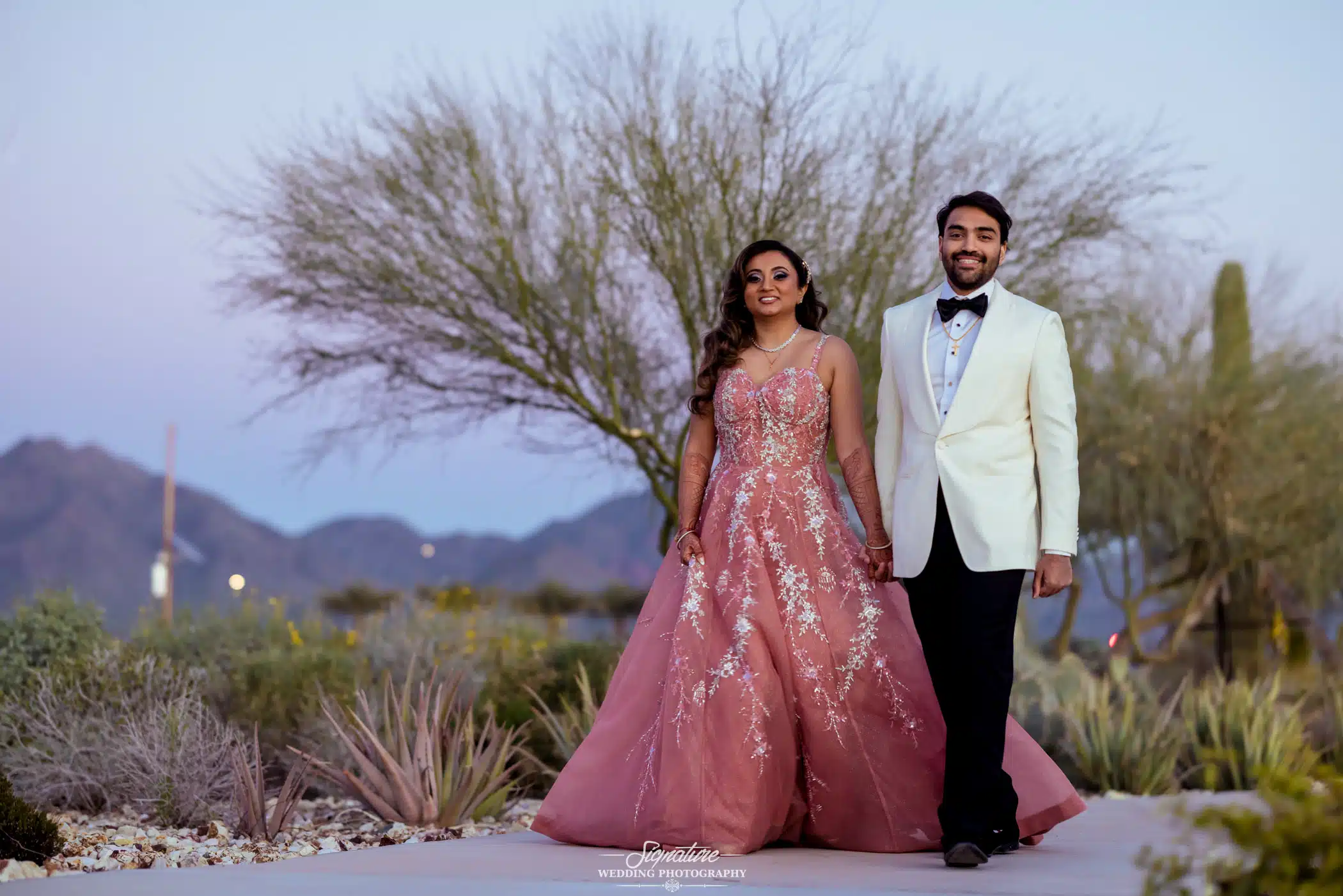
In Arizona, the light may change quickly. You can move from bright golden light to deep orange tones, pink skies, and blue hour in a short period.
Touch up your makeup before leaving for portraits. Bring comfortable shoes if the location requires walking. Ask your coordinator or photographer to help with your dress, veil, bouquet, and train.
The best portraits do not require complicated posing. They require time to slow down. Walk together. Hold hands. Look at each other. Let the landscape frame your connection.
Plan Reception Moments in the Right Order
Your reception timeline should tell your photographer when the key moments will happen.
Common reception events include:
- Guest arrival
- Grand entrance
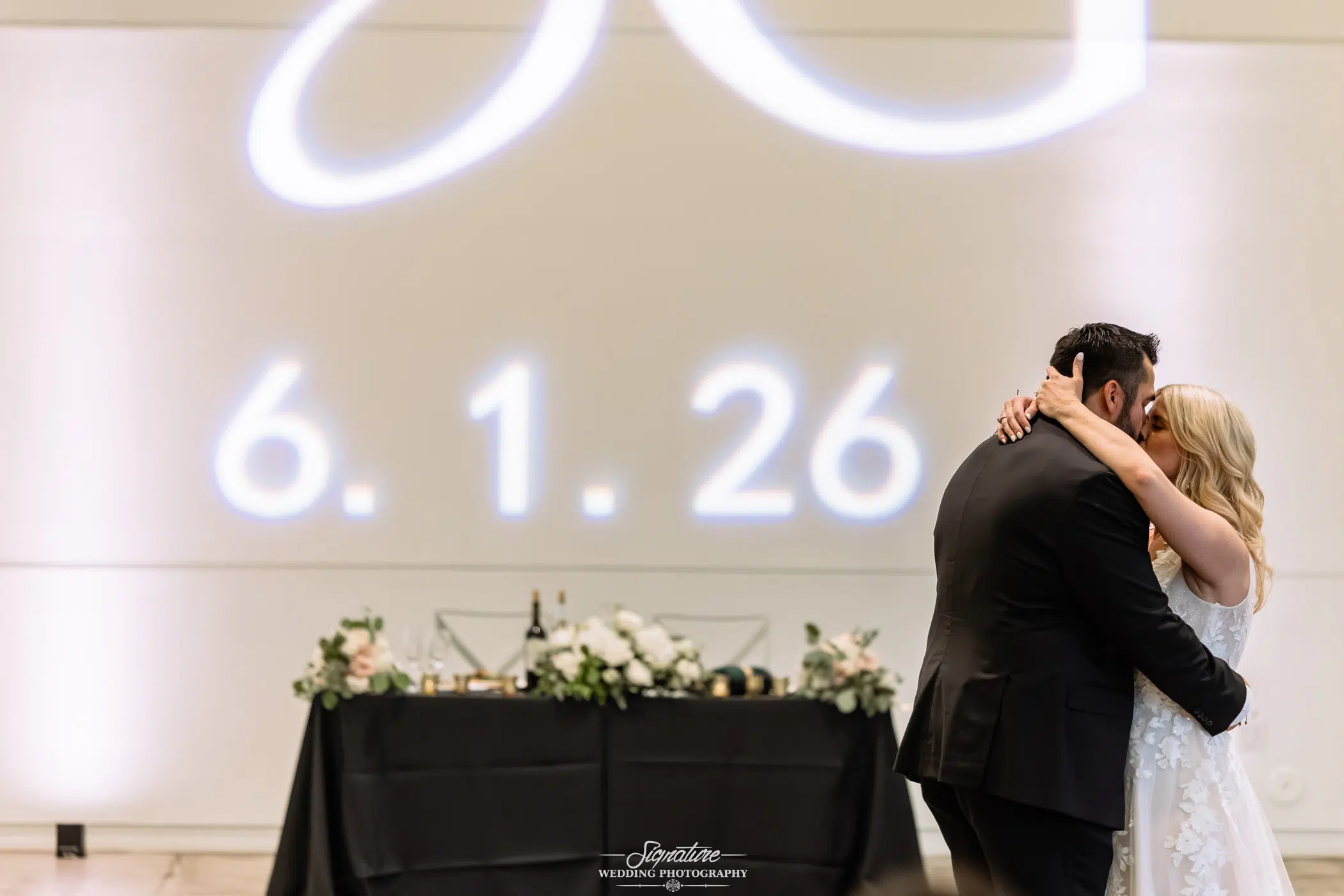
- First dance
- Parent dances
- Dinner
- Toasts
- Cake cutting
- Bouquet or garter traditions
- Open dancing
- Sunset or blue-hour portraits
- Exit or sparkler send-off
A common structure looks like this:
- 6:30 p.m.: Cocktail hour begins
- 7:00 p.m.: Grand entrance
- 7:10 p.m.: First dance
- 7:20 p.m.: Parent dances
- 7:30 p.m.: Dinner
- 8:15 p.m.: Toasts
- 8:35 p.m.: Cake cutting
- 8:45 p.m.: Open dancing
- 9:15 p.m.: Optional sunset or nighttime portraits
- 9:45 p.m.: Final dance or planned exit
You do not need to follow this exact order. Coordinate with your venue and caterer. The important point is to tell your photographer what will happen and when.
If you want your photographer to capture a full dance floor, avoid placing all formalities at the very end of the night. Guests often leave after dinner and the main events.
Common Timeline Mistakes to Avoid
Starting portraits too late
If portraits begin 20 minutes before sunset, you may receive only a few images before the light disappears. Schedule the full portrait block.
Forgetting travel time
Account for driving, parking, walking, elevators, shuttles, and venue access. Arizona locations can look close on a map but take longer to navigate in formalwear.
Scheduling too many group photos
A long list can take over the day. Choose the groups that matter most and save additional combinations for a casual reception or anniversary session.
Leaving no time to eat
You deserve to enjoy your meal. Tell your photographer when you plan to eat so they can take a break or photograph the reception details during that window.
Scheduling every minute
A packed timeline creates pressure. Leave room for delays, private moments, and genuine emotion.
Treating sunset portraits as optional
If beautiful desert portraits matter to you, put them on the schedule. Your coordinator, photographer, and wedding party can help protect that time.
Sample Photography-Friendly Arizona Timeline
Here is a practical example for a wedding with a first look and a 6:30 p.m. ceremony:
- 12:00 p.m.: Hair and makeup begins
- 2:00 p.m.: Photographer arrives for details and getting-ready coverage
- 3:30 p.m.: Couple gets dressed
- 4:00 p.m.: First look
- 4:15 p.m.: Wedding party portraits
- 4:45 p.m.: Family portraits
- 5:30 p.m.: Break, touch-ups, and guest arrival
- 6:30 p.m.: Ceremony
- 7:00 p.m.: Recessional and congratulations
- 7:15 p.m.: Couple portraits during golden hour
- 7:45 p.m.: Grand entrance
- 8:00 p.m.: First dance and dinner
- 8:45 p.m.: Toasts
- 9:00 p.m.: Cake cutting
- 9:15 p.m.: Open dancing
- 9:45 p.m.: Optional nighttime portraits or planned exit
Your actual schedule will depend on the season, venue, ceremony length, guest count, and photography coverage. Treat this as a starting point.
The best wedding timeline balances structure with freedom. It protects your portraits without taking you away from your celebration.
Let us create a wedding photography timeline that gives you beautiful light, genuine emotion, and the freedom to enjoy every moment together.


